

Te Whāriki is SOLD OUT.
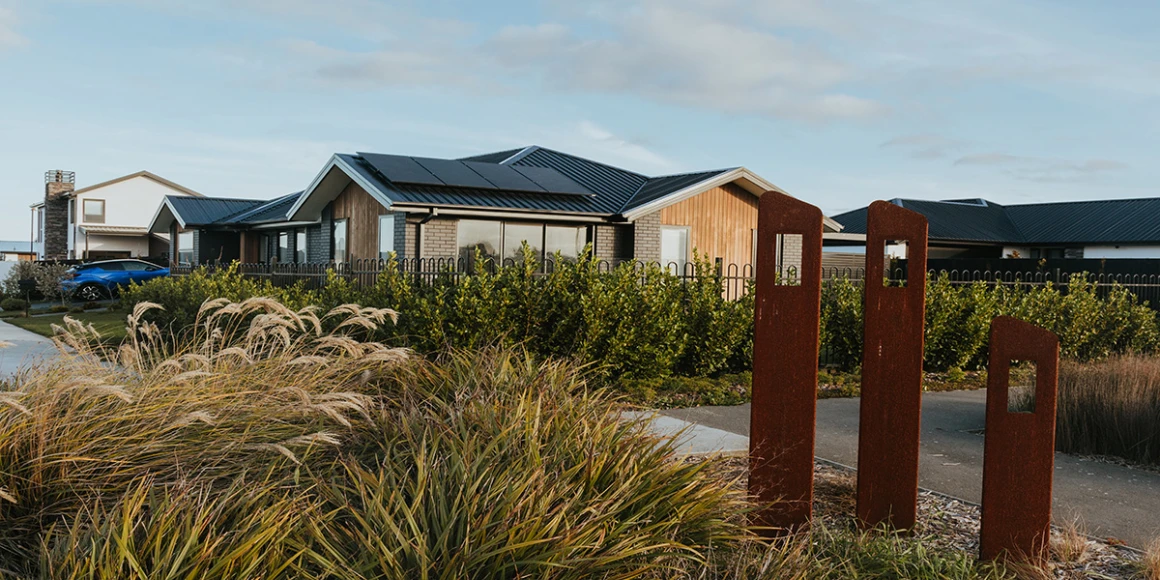
Te Whāriki offers the perfect mix of lifestyle options, set against beautiful waterways and wetlands. Nestled in the heart of Lincoln, in the Selwyn District, Te Whāriki is close to shops, supermarkets, restaurants and cafes, it’s ideal for work and play. It’s just 20-minutes from the city centre or 30-minutes for a trip to the beach or hills. This central location makes day trips to Akaroa and Mt. Hutt a breeze, both reachable in under an hour and a half.
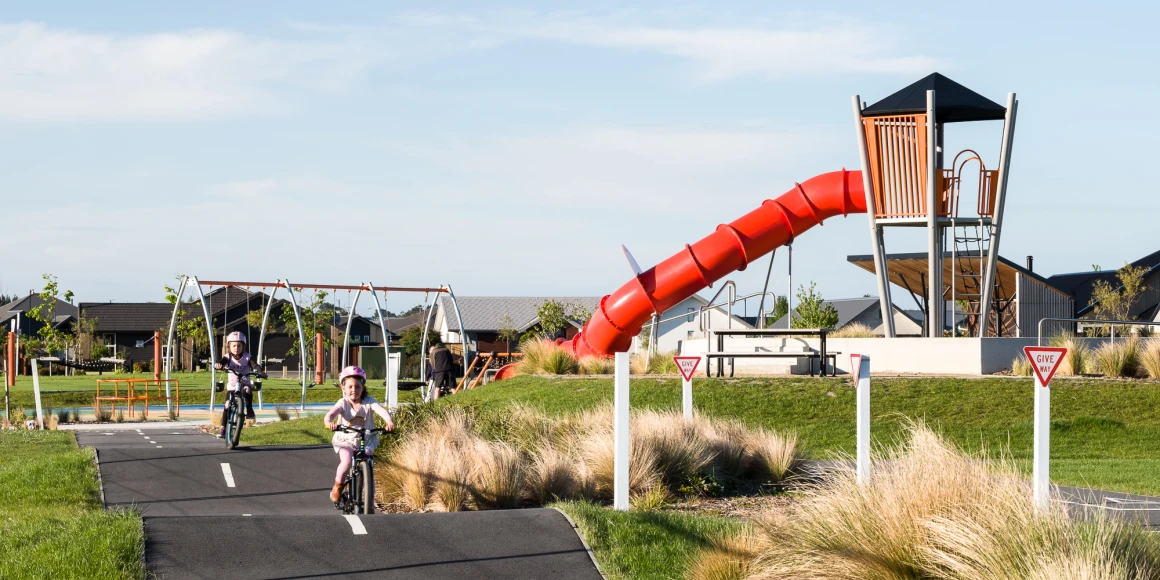
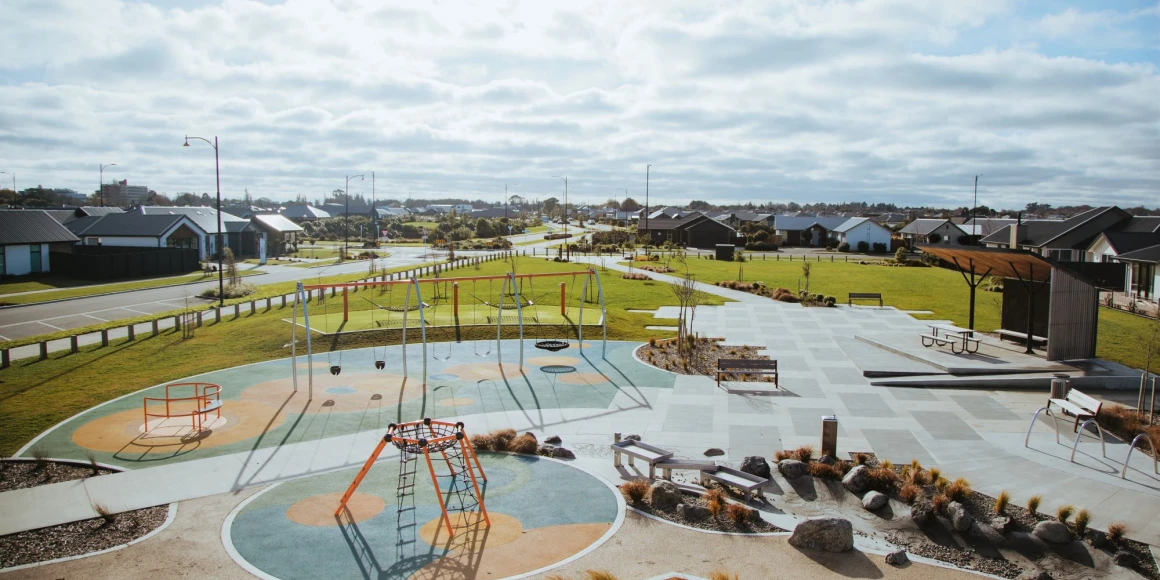
Nestled amongst walkways and cycle trails that weave through the beautiful wetland reserves and parks, Te Whāriki is the ideal location to take advantage of the Canterbury lifestyle.
If you have already purchased a section within Te Whāriki we have put together a list of Frequently Asked Questions. If your question isn't included, please don't hesitate to contact us.
Te Whāriki offers outstanding rural vistas, and the development was designed to help regenerate ecosystems native to the area.
In-line with iwi values around kaitiakitanga (stewardship) Ngāi Tahu Property also minimised any environmental impact during the development phases by reducing pollution and noise, conserving resources and reinstating and preserving natural features in the landscape.
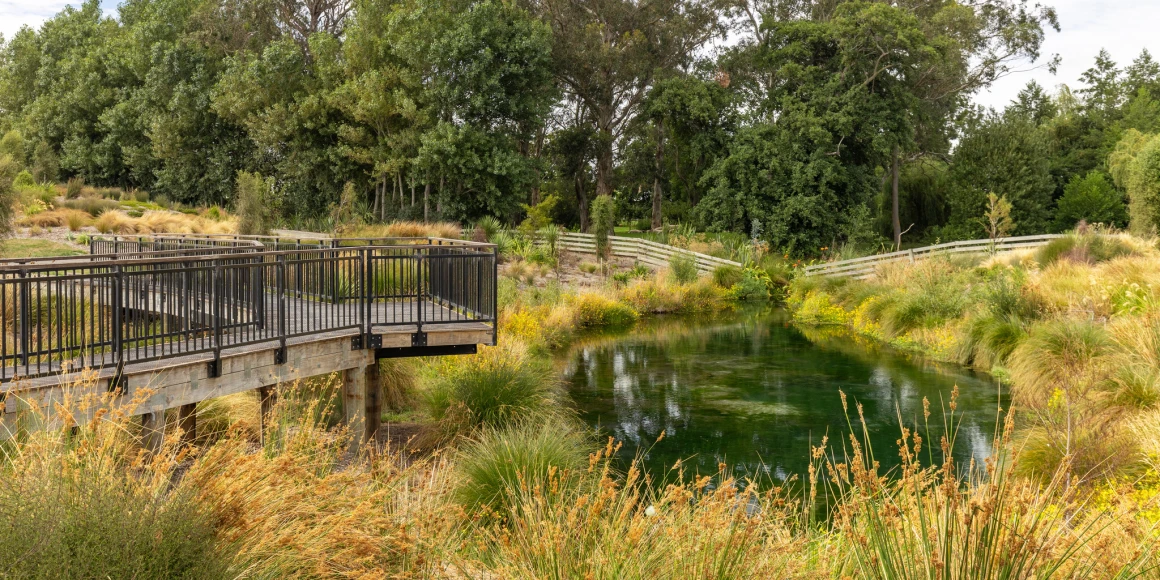
Working with the natural springs and water table we were able to create a network of wetland swales which manage and help treat the subdivision’s stormwater.
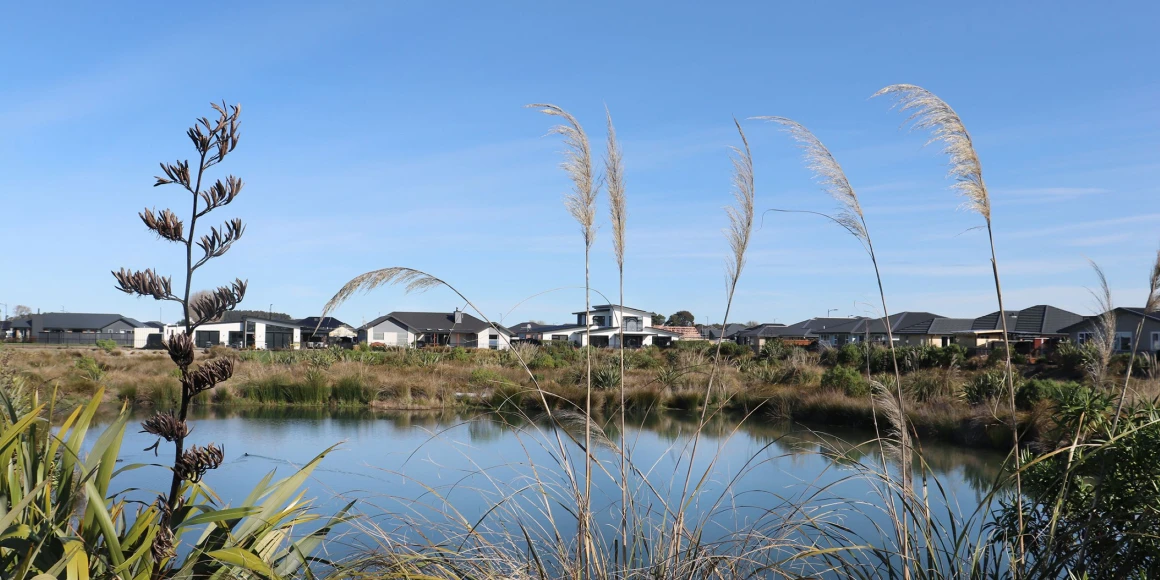
Plants native to the rohe (area) have been used to landscape around the wetlands and parks. A wide variety of shrubs and trees in the streetscapes and open spaces have resulted in natural feeling spaces to walk or cycle through. These species have been selected to minimise the need for watering.
The waterways and wetlands which assist in clearing stormwater run-offs from roads, gardens and other land surfaces are developing into living waterways supporting a growing diversity of wildlife, including wana (swans), kawau (cormorants), rakiraki (ducks), Pukeko, and poraka (frogs).
The location and the trails connecting Te Whāriki with Lincoln University, and the town centre encourage residents to walk and cycle where possible.
Te Whāriki also features covenants encouraging the building of healthy and energy efficient homes.
The development team at Ngāi Tahu Property is on a journey of continuous improvement around sustainability which is closely aligned with the values of our organisation, of our owners, and of our Lincoln University partners.
In 2007, Lincoln University and Ngāi Tahu Property Limited formed a joint venture to develop the decommissioned Dairy Block west of the university.
Both parties made a commitment that the development would help with the restoration of waterways which feed Te Waihora (Lake Ellesmere). That remained a central focus of the urban design and master-planning process. Te Taumutu Rūnanga worked closely with Ngāi Tahu Property to restore old waterways, re-establish native plants, integrate modern stormwater treatment systems, and bring to life, through street and reserve names, a number of place and species names associated with Te Waihora.
Alongside this Ngāi Tahu history, Te Whāriki also draws inspiration from Lincoln University’s history. The development, neighbourhood and street names all carry significant meanings.
To find out more read below:
Te Whāriki refers to the ‘floor mat’ or lakebed of Te Waihora – home to the rich wetland and lake community that once extended to the doorstep of Lincoln and the Te Whāriki development. The name symbolises a place for all to gather and meet. A whāriki is also a woven floor mat found in homes and meeting places today.
Today, a whāriki remains a place that draws together families and communities – it is therefore fitting for Te Whāriki which is building a community that weaves together the current township, Lincoln University, and future residents.
Wright, the fifth neighbourhood at Te Whāriki, is named after the first Chancellor of Lincoln University, Sir Allan Wright.
Sir Allan Wright has had a distinguished career as a farmer, a farmer politician and a businessman. He ran a mixed arable farm near Sheffield from 1946, winning the A.C. Cameron Royal Agricultural Society Gold Medal in 1973 for excellence in farming.
Matuku is the Māori name for the Australasian Bittern, a large bird that is part of the Heron family. Mostly found in wetlands, the Matuku is on the endangered birds’ list with less than 1,000 left in New Zealand. The Matuku is a secretive bird and, with its distinctive booming call, is heard more often than it is seen.
Matuku appear in many Māori historical accounts and stories and are recorded in early artwork. For generations, Matuku was an important bird for Māori, providing a food source and highly valued feathers used in ceremonial decoration. With the regeneration and plantation of the wetland at Te Whāriki, we would love to see them back here one day.
Professor Eric Raymond Hudson (1894-1974) was Director of Lincoln University from 1936 to 1952. Professor Hudson was the first graduate of Lincoln to rise to the position of Director. In World War I he had been an officer with the NZ Expeditionary Force in France and was wounded at the Battle of the Somme in 1916.
He lifted the College out of the Depression, guiding it through the World War II period, delivering it in good shape into the modern era. He retired in 1952 as a significant and respected public figure and was awarded a CBE for his services to education and agriculture.
Kaituna is one of many rivers and spring-fed streams which flow into Te Waihora. The size of the lake and its resources make it a tribally significant mahinga kai (food gathering area) for Ngāi Tahu.
The name Kaituna comes from the abundant tuna (eel) along with pātiki (flounder), aua (mullet), and waterfowl. This abundance of resource supported a number of pā and mahinga kai sites including Te Kūhaka Wariwari located on the spur above Ataahua Domain.
William Edward Ivey was appointed Director/Manager of the School of Agriculture at Lincoln in 1878. The school became Canterbury Agricultural College in 1896, Lincoln College in 1961, and Lincoln University in 1990. William Edward Ivey is therefore regarded as one of the founding fathers of Lincoln University.
Born in Australia and educated at the Royal Agricultural College in Cirencester, England, as Director/Manager he lived in what is now known as Ivey Hall, on the University campus.
Our Sales Office has now closed. You can contact our Sales Manager, Dene Maddren for information on any sections you have already purchased:
Mobile: 021 622 749
Email: dene.maddren@ngaitahu.iwi.nz
Yes, you can use a builder of your choice when you purchase a section at Te Whāriki.
Yes, it is a requirement and part of the restrictive covenants at Te Whāriki that all landscaping must be completed prior to moving in. If you need to find a Landscape Architect a list of qualified companies and individuals can be found here.
Design guidelines, and all other key information for Te Whāriki can be found in Useful Documents here.
No, there are no restrictions on when you have to build by. The only requirement is that you keep your section well maintained with no overgrowth or rubbish on site. Read the full covenants here.
To see which schools are zoned for the area please check out the New Zealand Schools website for the most up to date information.
A free site-specific geotechnical report is available for each section. If you'd like a copy of the report please contact our residential sales manager, Dene Maddren on 021 989 721 or by email dene.maddren@ngaitahu.iwi.nz
Te Whāriki is protected and enhanced through a programme of ecologically sustainable development. Impact on the environment is minimised by reducing pollution and noise, conserving resources, preserving the landscape, and encouraging native plants. The community features varied shrubs and trees in the streetscapes and open spaces, creating a natural feel, minimising the need for watering, and attracting local birdlife.
The development also features living waterways promoting wildlife. The waterways and wetlands also assist in clearing storm water run-offs from roads, gardens, and other land surfaces.
Walking and cycling are encouraged, reducing noise, emissions and energy requirements of the residents.
Yes, all plans must be submitted to the Te Whāriki Sales Manager for design approval, including a complete landscaping plan prepared by a landscape professional.
Copyright © Ngāi Tahu Property